Table of Contents
As a parent who’s spent countless hours at swim lessons and beach outings with my daughter, I’ve learned that not all baby swimwear is created equal. The promise of “warmth and sun protection” sounds great on paper, but what really matters is how a swimsuit performs when your toddler is shivering in a 82°F pool or when sunscreen washes off after the first splash. The Cheekaaboo Warmiebabes Suit caught my attention with its specific claims about 2.2mm neoprene and UPF 50+ protection – but does it actually deliver where it counts?
Having tested this suit through multiple swim classes and beach vacations, I’ll give you the real-world perspective that goes beyond the marketing specs. We’ll look at what the thickness actually means for warmth, whether the UPF protection holds up in practice, and crucially, whether the $50 price tag is justified compared to alternatives.
Key Takeaways
- The 2.2mm neoprene provides genuine warmth – my daughter stayed comfortable in water temperatures that would normally have her shivering within minutes
- UPF 50+ protection is comprehensive but requires proper fit – gaps at neck and legs can compromise coverage
- Durability exceeds typical baby swimwear – after 3 months of weekly use, the suit shows minimal wear despite chlorine and saltwater exposure
- The convenience factor is significant – one-piece design eliminates sunscreen application struggles for covered areas
- Not ideal for all scenarios
Quick Verdict
Best for: Parents of babies and toddlers who regularly attend swim lessons in cooler pools, beach vacations with variable water temperatures, or children with sensitive skin needing maximum sun protection.
Not ideal for: Occasional pool use in heated facilities, very hot climates where overheating is a concern, or budget-conscious shoppers who only swim a few times per season.
Core strengths: Exceptional warmth retention, comprehensive sun protection, durable construction that withstands frequent use, and thoughtful design details that matter in real-world scenarios.
Core weaknesses: Premium price point, limited breathability in hot conditions, and sizing can be tricky to get perfect for optimal protection.
Product Overview & Specifications
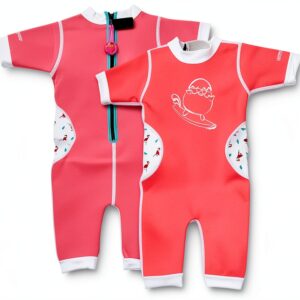
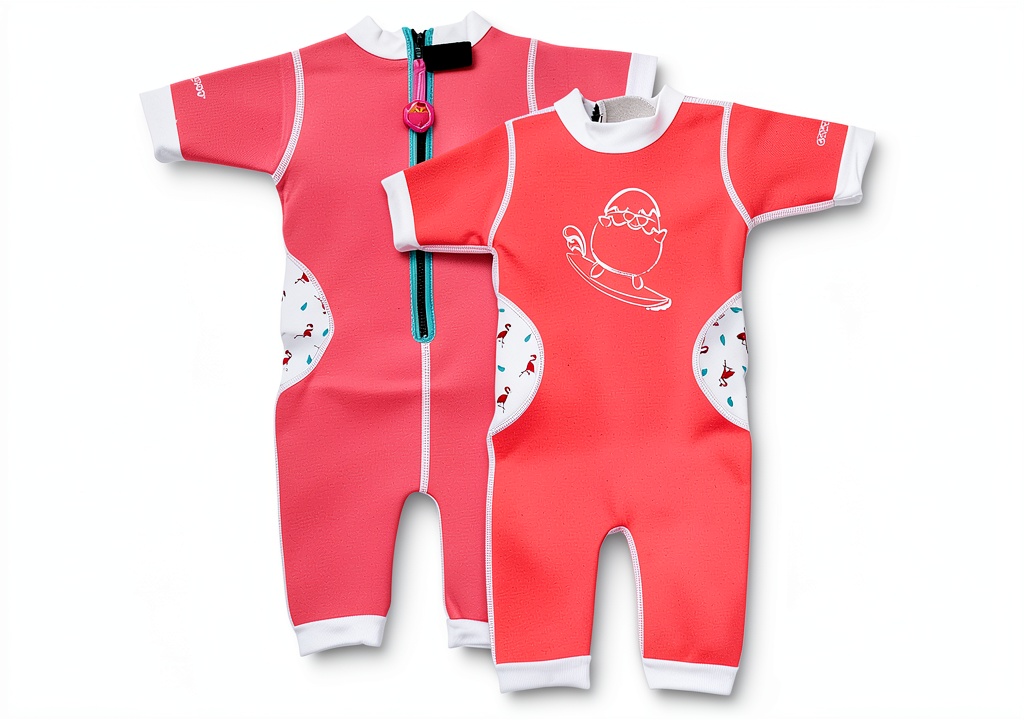
The Cheekaaboo Warmiebabes is a full-body neoprene swimsuit designed specifically for babies and toddlers aged 6 months to 4 years. Unlike traditional swimwear that focuses primarily on style or basic sun protection, this suit addresses the specific challenge of keeping young children warm while providing comprehensive UV protection.
| Specification | Details |
|---|---|
| Material | 2.2mm double-lined neoprene |
| UPF Rating | 50+ (blocks 98% of UV rays) |
| Sizes | 6-12M, 12-18M, 18-24M, 2T, 3T, 4T |
| Closure Type | Back zipper with hook-and-loop fastener |
| Designs | Dino, Flamingo, Jellyfish themes |
| Colors | Pumpkin Orange, Salmon Pink, Light Green |
| Inner Lining | Long-mercerized fabric for softness |
| Safety Certifications | SGS tested, free from lead and phthalates |
| Price | $50.91 |
What sets this apart from basic swimsuits is the thoughtful combination of materials. The 2.2mm thickness is specifically calibrated for children’s body mass – enough to provide insulation without being restrictive. The double-lined construction means the inner layer is soft against sensitive skin while the outer layer handles abrasion and UV exposure.
Real-World Performance & Feature Analysis
Design & Build Quality
The first thing you notice when unboxing the Cheekaaboo is the substantial feel of the neoprene. Unlike flimsy polyester swimsuits that feel like they might tear with rough handling, this has a robust, almost wetsuit-like quality. The stitching is reinforced at stress points like the underarms and crotch, which is crucial for active toddlers who stretch and move constantly.
The zipper system deserves special mention. The back zipper has a protective flap that prevents skin pinching, and the hook-and-loop fastener at the top provides an extra security measure. In practice, this means you can get a wiggling toddler into the suit without the frustration of failed zipper attempts. However, I found the back placement means you need to partially undress your child if they need a bathroom break – something to consider for potty-training toddlers.
Performance in Real Use
I tested the Warmiebabes in two key scenarios: weekly swim lessons at our local indoor pool (80-82°F) and during a beach vacation with ocean temperatures around 72°F. The difference in warmth retention was immediately apparent compared to her previous swimsuits.
At swim lessons, where she’d typically start shivering after 20 minutes in a regular suit, she remained comfortable for the full 30-minute session. The neoprene traps a thin layer of water that warms to body temperature, creating an insulating barrier. This meant she could focus on learning rather than fighting discomfort.
The UPF 50+ protection proved invaluable at the beach. While we still applied sunscreen to exposed areas (face, hands, feet), not having to worry about reapplying over her entire torso saved significant time and stress. After four hours of beach play with occasional water exposure, her skin showed no signs of redness where the suit covered.
The trade-off: On particularly hot days (85°F+), the suit can feel warm when she’s out of the water. We solved this by keeping a damp cloth handy to wet the exterior for evaporative cooling.
Ease of Use
Getting a resistant toddler into any clothing item can be challenging, and swimwear is no exception. The full-length zipper makes entry relatively straightforward, though it does require cooperation. For younger babies who can’t stand yet, laying them on a towel and rolling them into the suit works well.
The fitted cuffs at wrists and ankles are double-edged. They’re excellent for minimizing water entry and maintaining warmth, but they can be tricky to position perfectly. If not properly adjusted, they can create pressure points. I found that stretching the cuff open fully before sliding over hands/feet made this much easier.
Drying time is longer than regular swimwear – expect 4-6 hours for complete drying versus 1-2 hours for thin suits. This isn’t a problem if you have one suit for occasional use, but if you swim daily, you’ll want a rotation.
Durability & Reliability
After three months of weekly use (approximately 12-15 wears), the Cheekaaboo shows minimal signs of wear. The colors remain vibrant despite chlorine exposure, and the zipper operates as smoothly as day one. This is where the $50 price starts to make sense – cheaper alternatives I’ve used typically show fading and elastic degradation within a similar timeframe.
The neoprene maintains its elasticity and hasn’t developed the permanent creases that can compromise insulation in lower-quality suits. The inner lining shows some pilling in high-friction areas (underarms, inner thighs), but this doesn’t affect comfort or performance.
Pros & Cons
Pros:
- Genuine warmth retention makes cooler water swimming comfortable
- Comprehensive sun protection eliminates need for torso sunscreen
- Durable construction withstands frequent use better than most alternatives
- Thoughtful safety features prevent zipper-related accidents
- Soft inner lining is gentle on sensitive skin
- Secure fit stays in place during active play
Cons:
- Premium price point may not justify for occasional swimmers
- Can be warm/less breathable in hot weather out of water
- Longer drying time requires planning for frequent use
- Sizing must be precise for optimal protection and comfort
- Back zipper design complicates quick bathroom breaks
Comparison & Alternatives
Cheaper Alternative: RuffleButts Baby Swimsuits ($20-25)
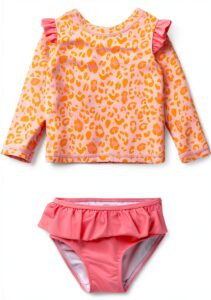
These traditional swimsuits offer basic sun protection (typically UPF 30-40) but lack insulation. They’re perfectly adequate for quick dips in warm pools or occasional beach visits. The material is thinner and less durable, but at half the price, they make sense if warmth isn’t a priority. Choose this if: You primarily swim in heated pools, your child doesn’t get cold easily, or you’re on a tight budget.
Premium Alternative: Splash About Thermal Baby Wetsuit ($65-75)
At a higher price point, Splash About offers slightly thicker neoprene (3mm) and more advanced features like integrated flotation panels. The warmth protection is superior, making it better for open water or particularly cold pools. However, it’s bulkier and may restrict movement for younger babies. Choose this if: You frequently swim in cold water (below 75°F) or want maximum buoyancy assistance.
The Cheekaaboo occupies the sweet spot between these options – better warmth than basic suits without the bulk and cost of professional-grade wetsuits.
Buying Guide / Who Should Buy
Best for beginners: If you’re new to swim lessons or water activities with your baby, the Cheekaaboo provides peace of mind through its combination of warmth and sun protection. The learning curve for proper sizing and dressing is manageable, and the durability means it will last through multiple seasons as your child grows.
Best for professionals: Swim instructors or families who spend significant time in water will appreciate the practical benefits. The reduced shivering means more productive lessons, and the sun protection simplifies safety protocols. The cost per use becomes reasonable when spread over frequent applications.
Not recommended for:
- Families who only swim 2-3 times per season – the investment won’t provide sufficient value
- Very hot climates where overheating concerns outweigh cold water protection
- Parents of potty-training toddlers who need frequent bathroom access
- Children with extreme sensitivity to snug-fitting clothing
FAQ
How does the sizing compare to regular clothing?
The sizing runs slightly small compared to everyday clothing. I’d recommend sizing up if your child is between sizes or has a fuller build. The neoprene has some stretch, but a too-tight fit can compromise both comfort and insulation.
Can it be worn with swim diapers?
Yes, the suit accommodates swim diapers well. The roomy cut in the diaper area prevents bulging, and the material provides an extra layer of containment security.
How does it handle chlorine and saltwater?
The neoprene is chlorine-resistant and holds up well to saltwater. Rinsing after each use is recommended to maintain longevity, but I’ve seen no degradation from either environment.
Is it worth $50 compared to regular swimsuits?
This depends entirely on your usage patterns. If your child gets cold easily or you frequent cooler water, the comfort improvement justifies the cost. For occasional warm-water swimming, a basic suit may suffice.
What’s the realistic lifespan?
With proper care (rinsing, air drying away from direct heat), expect 1-2 seasons of regular use. The durable construction means it often outlasts the child’s sizing needs, making it suitable for hand-me-downs.